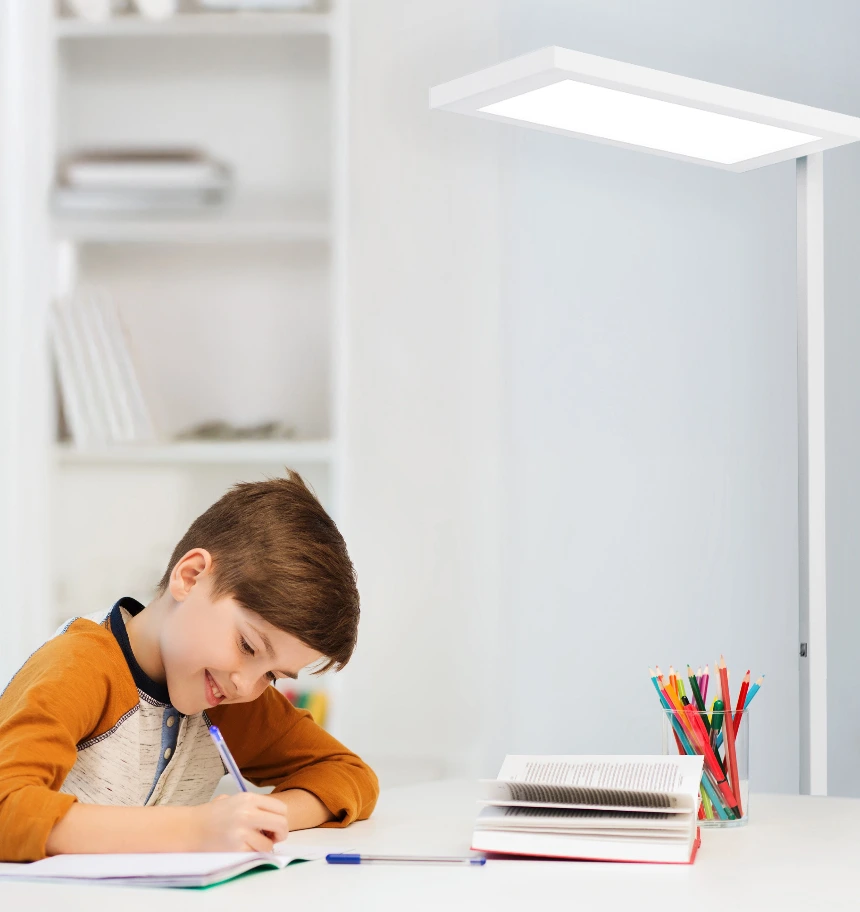
When a student sits down for a long evening of studying, the quality of their workstation lighting directly impacts how long they can maintain deep focus. Most home study setups rely on traditional single-point desk lights or clip-on lamps. While these fixtures illuminate paper, they often create a harsh, high-contrast environment that tires developing eyes within 30 to 45 minutes.
Understanding why a floor study lamp provides superior visual comfort requires looking at the ergonomics of human vision, the physics of glare, and how modern room-filling light distribution protects against fatigue.
The Hidden Problem with Traditional Desk Lamps
Standard desk lamps operate like spotlights. They concentrate high-intensity light onto a small 12-inch circle on the desk while leaving the rest of the room in darkness.
This creates three major physiological challenges for students:
- Pupil Exhaustion: When a student looks down at their illuminated textbook, their pupils contract. When they look up across the dark room to think or type on a laptop, their pupils instantly dilate. Doing this hundreds of times during a single study session exhausts the eye muscles, leading to heavy eyelids, burning vision, and premature focus drops.
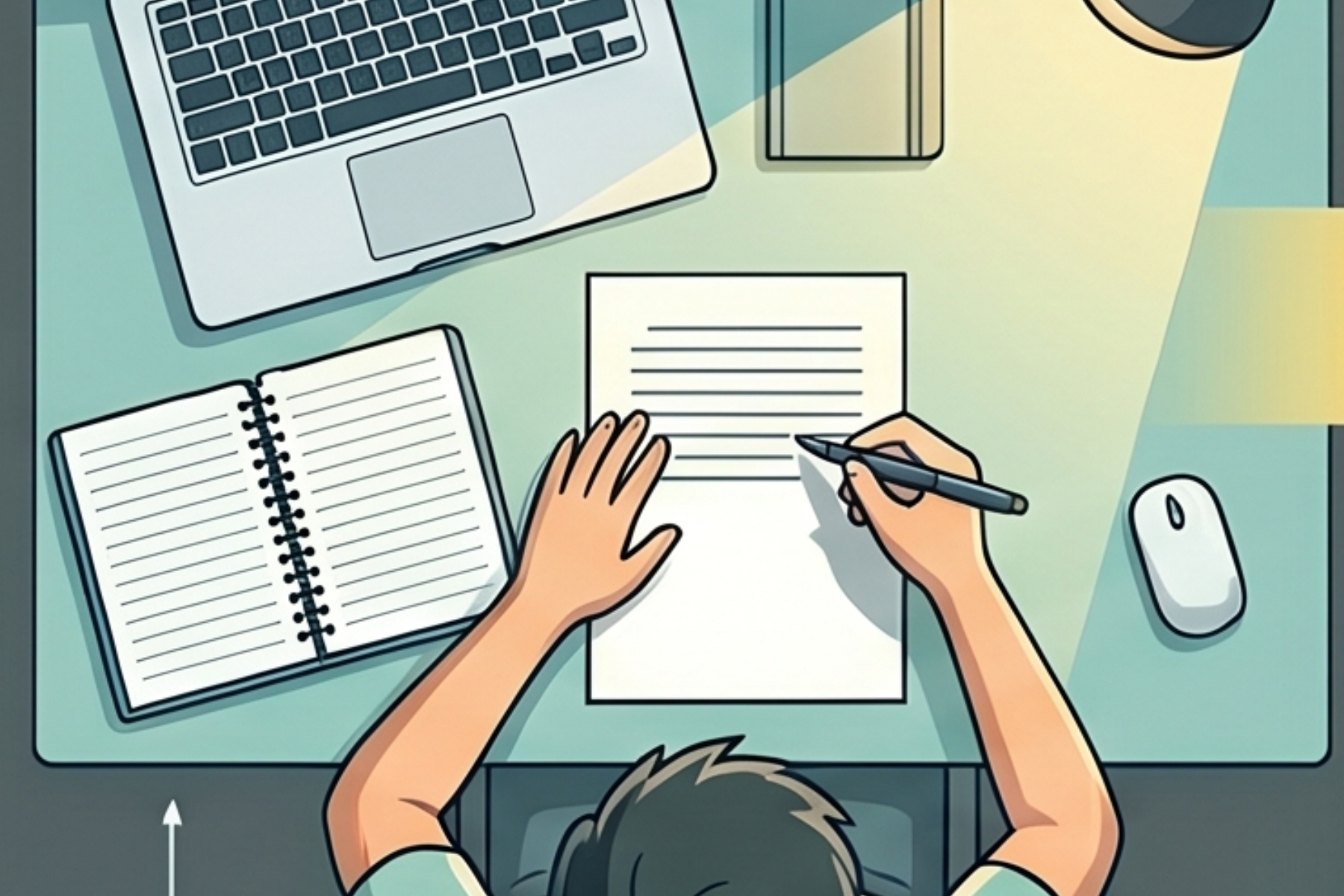
- Distracting Hand Shadows: Because standard desk lights originate from a single point directly above or beside the workspace, a student’s writing hand casts a dense, dark shadow across the page.
- Severe Page Glare: Direct downward beams reflect off glossy textbook paper and laptop screens directly into the eyes, causing micro-squinting and tension headaches.
If you are currently evaluating standard desktop fixtures, be sure to read our breakdown of the best desk lamps for studying to see how different desktop form factors compare.
What Makes the Ideal Light for Studying?
To create the ideal light for studying, lighting engineers focus on a concept called Direct/Indirect Dual-Direction Distribution. Rather than forcing one light bulb to do all the work from a desk-mounted base, an advanced German floor study lamp splits its light output into two distinct layers:
- The Upward Ambient Cloud (Indirect Light): Approximately 80% of the light is projected upward onto the ceiling. The ceiling acts as a massive reflector, gently bouncing a broad blanket of soft illumination across the entire room. This completely eliminates pitch-black corners and levels out contrast.
- The Downward Task Matrix (Direct Light): The remaining 20% of the light is cast downward directly onto the desk surface through a specialized glare-reducing diffuser, providing clear illumination for reading and writing without hot spots.
By balancing ambient room light with precision task light, pupil dilation stays stable, hand shadows vanish, and eye muscles remain completely relaxed.
Floor Study Lamps vs. Traditional Desk Lights: A Head-to-Head Comparison
| Performance Feature | Standard Desk Lamp | Dual-Direction Floor Study Lamp |
| Desk Surface Footprint | Takes up valuable desk space | Zero desk space required (stands beside desk) |
| Room Contrast Balance | Poor (Bright spot, dark room) | Exceptional (Fills entire room evenly) |
| Hand Shadows | Sharp, distracting shadows | Shadow-free multi-angle LED matrix |
| Page & Screen Glare | High direct reflection | Diffused, glare-free surface coverage |
| Eye Fatigue Prevention | Low (Triggers pupil strain) | High (Mimics natural daytime ambient light) |
Frequently Asked Questions About Study Lighting
Which light is good for eyes while studying?
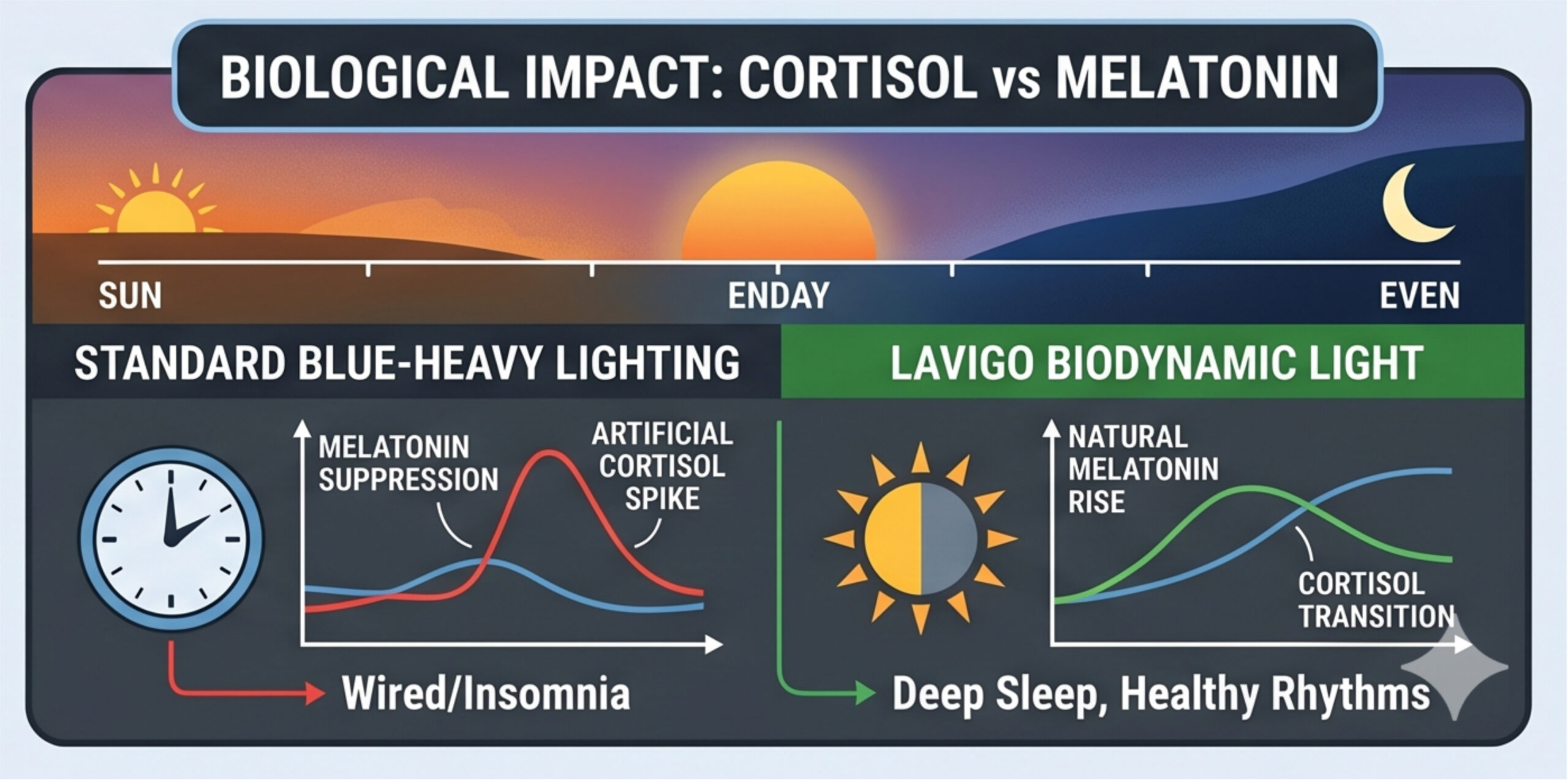
The best studying light for eye health is a flicker-free, daylight-balanced (4000K) LED light source that provides both indirect ambient lighting (to illuminate the room) and direct task lighting (to illuminate the workspace). This dual-layer setup prevents pupils from constantly contracting and dilating, eliminating eye strain during long reading sessions.
Is a floor lamp better than a desk lamp for studying?
Yes. A dedicated floor study lamp stands beside the desk, keeping the writing surface 100% free of cords and bulky bases. More importantly, tall floor units project light upward against the ceiling to illuminate the whole room evenly, whereas desk lamps only light a small localized area.
How do I stop my hand from casting a shadow when writing?
Hand shadows occur when light comes from a single, concentrated point source. To eliminate hand shadows, use a fixture with a wide multi-LED array or a dual-direction floor lamp that distributes light across broad angles, softening edges and neutralizing shadows across textbooks and notebooks.
Ready to Upgrade Your Student’s Study Space?
Switching from a harsh spotlight to an architecturally balanced floor study lamp transforms a chaotic, tiring study space into a calm, daylight-quality environment where students can focus comfortably for hours. Learn more about the precision engineering behind the LAVIGO.core Home floor lamp and see how dual-direction lighting protects developing eyesight.