Key Takeaway
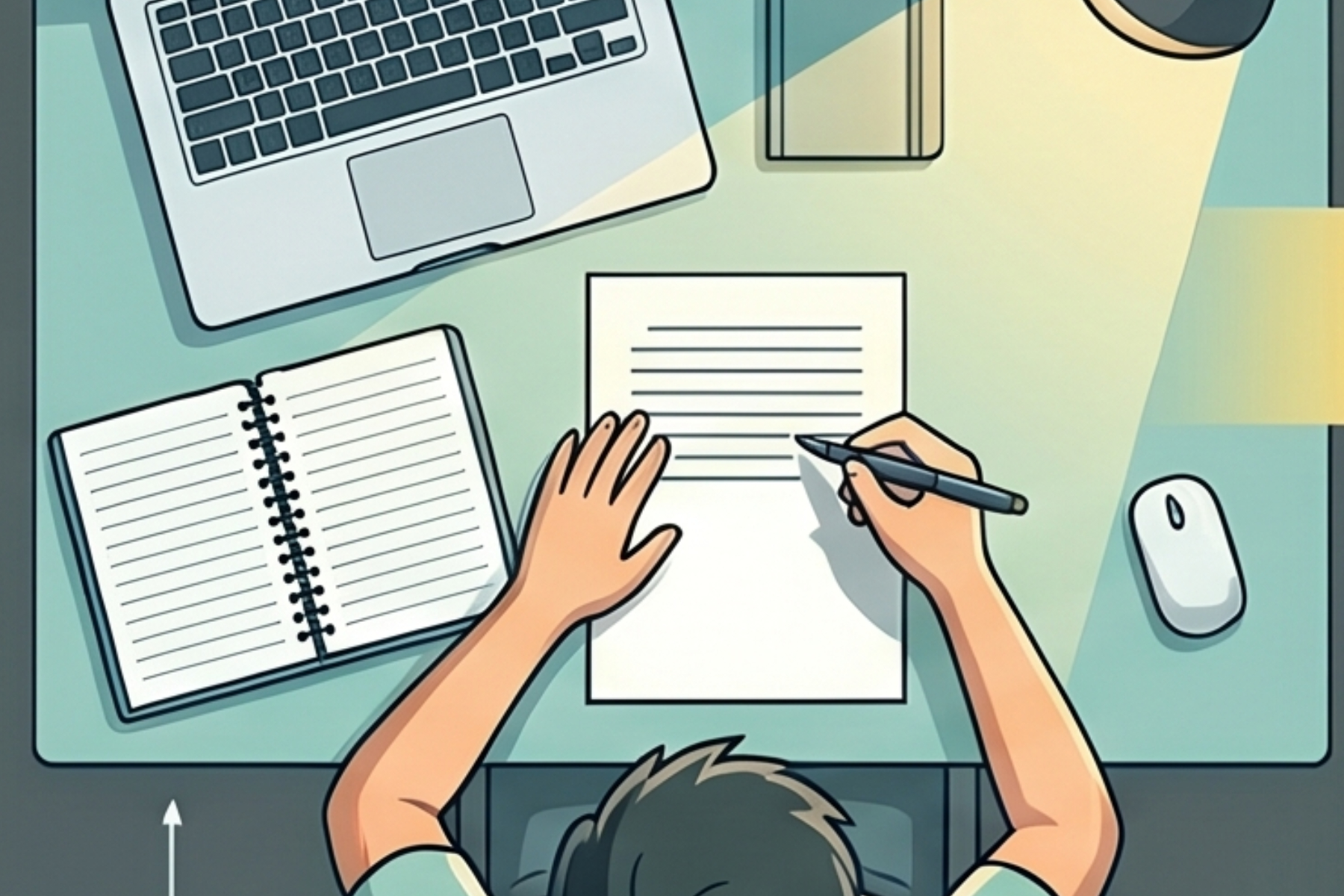
If a child is right-handed and their study lamp sits on the right side of the desk, the light source throws a sharp shadow directly over their pen. The brain is forced to work overtime to “decode” text obscured by hand shadows. True visual ergonomics requires moving the light source entirely overhead to erase workspace obstructions.
Parents are incredibly precise when organizing a home study nook. They balance monitor heights to prevent neck strain, position keyboards to protect wrists, and eliminate cable clutter to keep the mind calm.
But the moment the desk lamp arrives, ergonomics are usually thrown out the window.
Most people place a desk lamp wherever there happens to be an open power outlet or a spare square inch of desk space. They don’t realize that this random placement introduces a subtle, highly frustrating physical obstacle into their child’s daily workflow: the hand shadow.
The Writing Obstacle Course
Think about the mechanics of writing or typing. If your child is right-handed, and their primary light source sits on the right side of the desk, the light hits their arm and throws a dark, sharp shadow directly over the point of their pen.
Every single time they write a sentence, they are forced to look through the shadow of their own hand to see their work.
The human brain hates visual gaps. When a shadow covers text or paper, your visual cortex has to work significantly harder to decode the high-contrast shapes, fill in the blanks, and maintain reading comprehension. It forces a continuous, micro-strain on the eyes that builds up hour after hour.
The Left-Side Fix is Only a Band-Aid
Moving the lamp to the opposite side (the left side for a right-handed writer) removes the immediate hand shadow, but it doesn’t fix the core problem. Traditional small lamps still create deep shadows behind laptops, textbooks, and keyboards. The desk remains an erratic landscape of bright spots and dark pockets.
True visual ergonomics requires an environment where shadows cannot exist.
Erasing the Shadows via Height
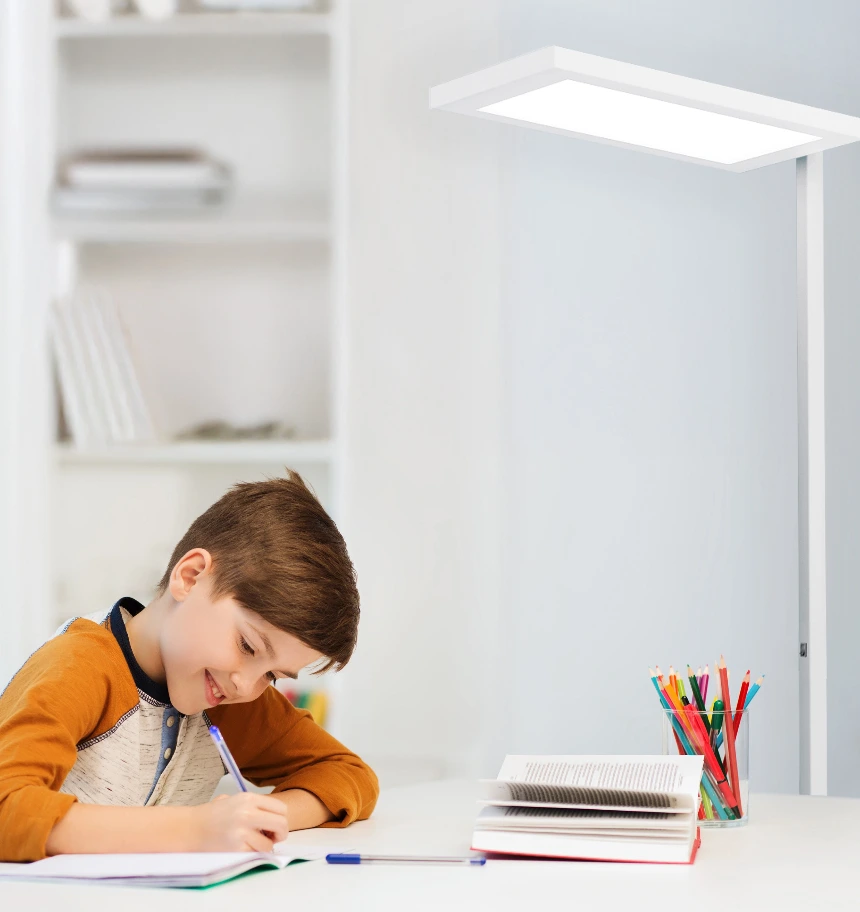
To completely eliminate shadows, the light cannot come from a low, lateral angle on the desk surface. It must come from directly above and slightly behind the user’s head, flooding downward in a wide, volumetric sheet.
When light envelopes the workspace from a higher plane, it wraps around hands, pens, and monitors. Shadows are blurred out and erased before they can hit the paper.
Take a look at your child’s desk tonight while they are working. If they are constantly moving their head or adjusting their paper to see around a shadow, their setup isn’t done. They don’t need a brighter bulb; they need better height physics.