Key Takeaway
Space management is focus management. A cluttered desk increases cognitive load and spikes procrastination. By moving to a floor study lamp, you reclaim up to 20% of your child’s desk surface while achieving a “volumetric” light spread that standard best study lamps simply cannot match in a cramped room.
We’ve all seen the “aesthetic” study accounts on social media—pristine desks, organized pens, and perfect lighting. But in reality? Most student desks are a battlefield of open laptops, 500-page textbooks, and half-finished coffee mugs.
If you are trying to find the best desk lamp for studying to fit into a small bedroom or a dorm, you’ve likely realized the problem: the lamp base alone takes up the space of a whole textbook.
It’s time to stop thinking about the desk and start thinking about the floor.
Reclaiming the “Power Zone”
The “Power Zone” is the square footage directly in front of your child. When that space is occupied by a lamp base and a tangled power cord, the desk feels cramped. This physical “tightness” leads to mental fatigue.
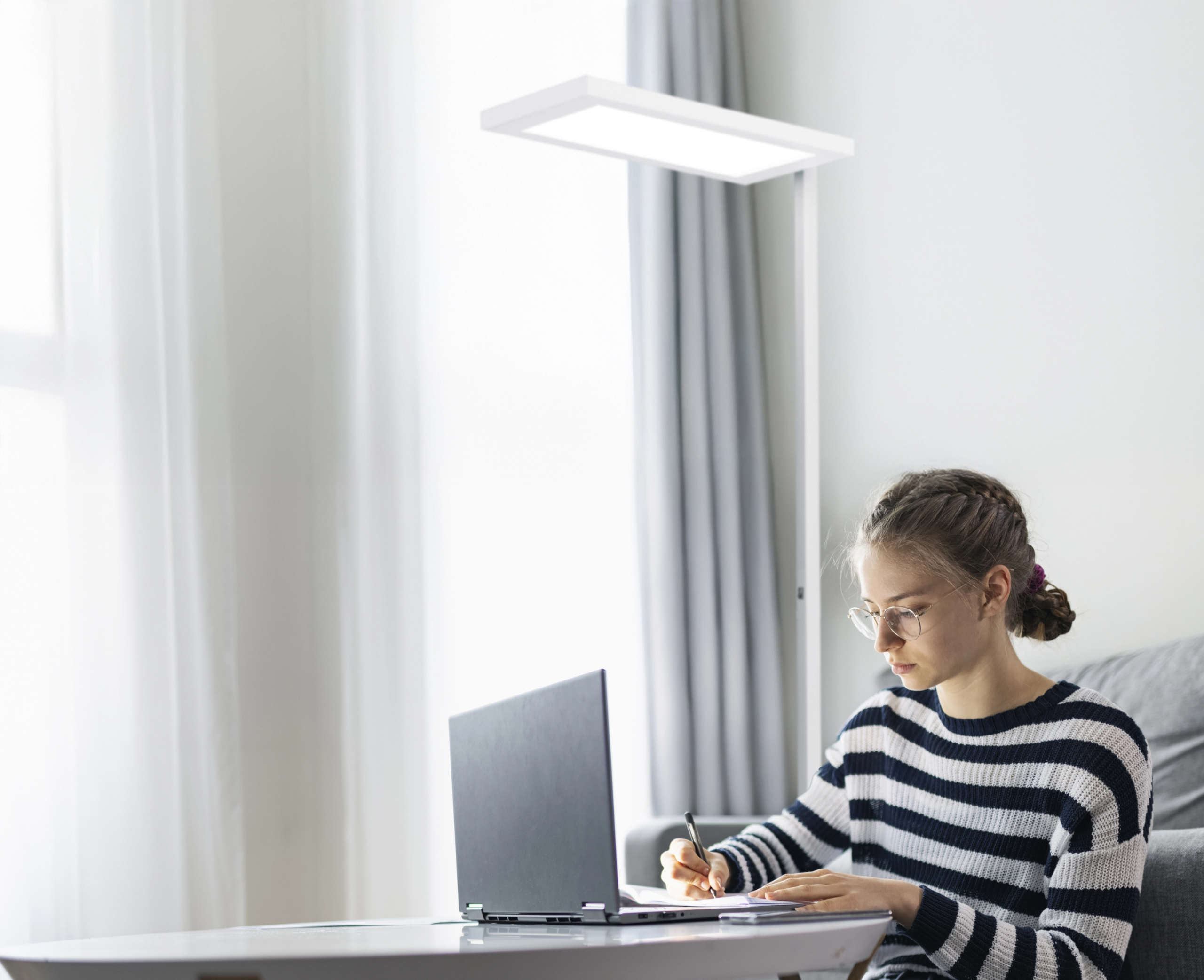
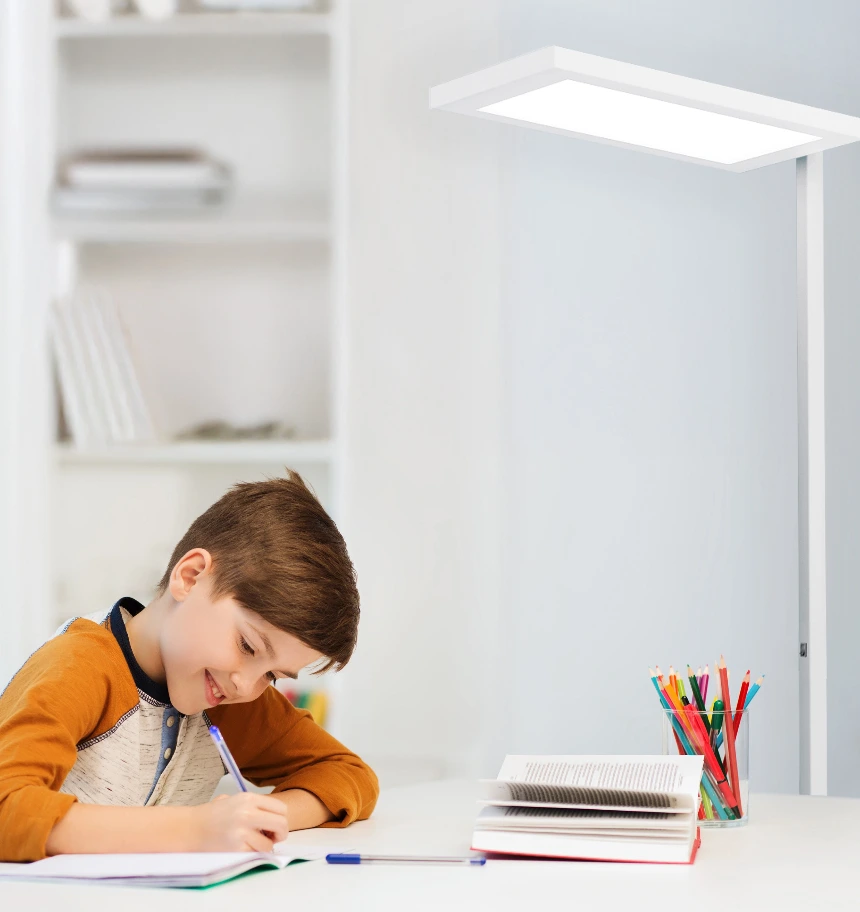
By switching to a floor study lamp, you aren’t just changing the light; you are changing the ergonomics. A floor-standing model (like the LAVIGO.core Home) stands behind or beside the chair. It delivers the best study light from above and behind, leaving the desk 100% open for actual work.
Why Design Experts Prefer Floor-Standing Study Lights:
- Vertical Expansion: In a small room, lighting up the ceiling makes the space feel larger and less “caged in.” Standard best study lamps keep the room dark and the desk bright, which creates a claustrophobic “tunnel vision” effect.
- Uniformity: Desk lamps create a “hot spot” of light. A floor lamp provides an even wash of 4000K light across the entire room. This is why professional architects prioritize indirect lighting to reduce eye strain.
- Cable Management: No more cords draped across the laptop. The power stays at floor level, hidden behind the furniture.
The Science of a “Clean” Environment
Research from organizations like Edutopia suggests that an organized environment is a massive predictor of academic endurance. When a child has a “clean” desk, they are less likely to feel overwhelmed by the task at hand.
When you choose a best study light that stays off the desk, you are signaling to your child’s brain that this is a professional workspace. You are moving from a “homework corner” to a “high-performance lab.”
FAQ: Layout & Design for Success
Q: Will a floor lamp be too tall for a room with low ceilings?
A: Actually, it’s better. In rooms with low ceilings, a floor study lamp creates a “canopy” of light that eliminates shadows more effectively than any ceiling fixture or desk model could.
Q: What is the best study light color for a bedroom?
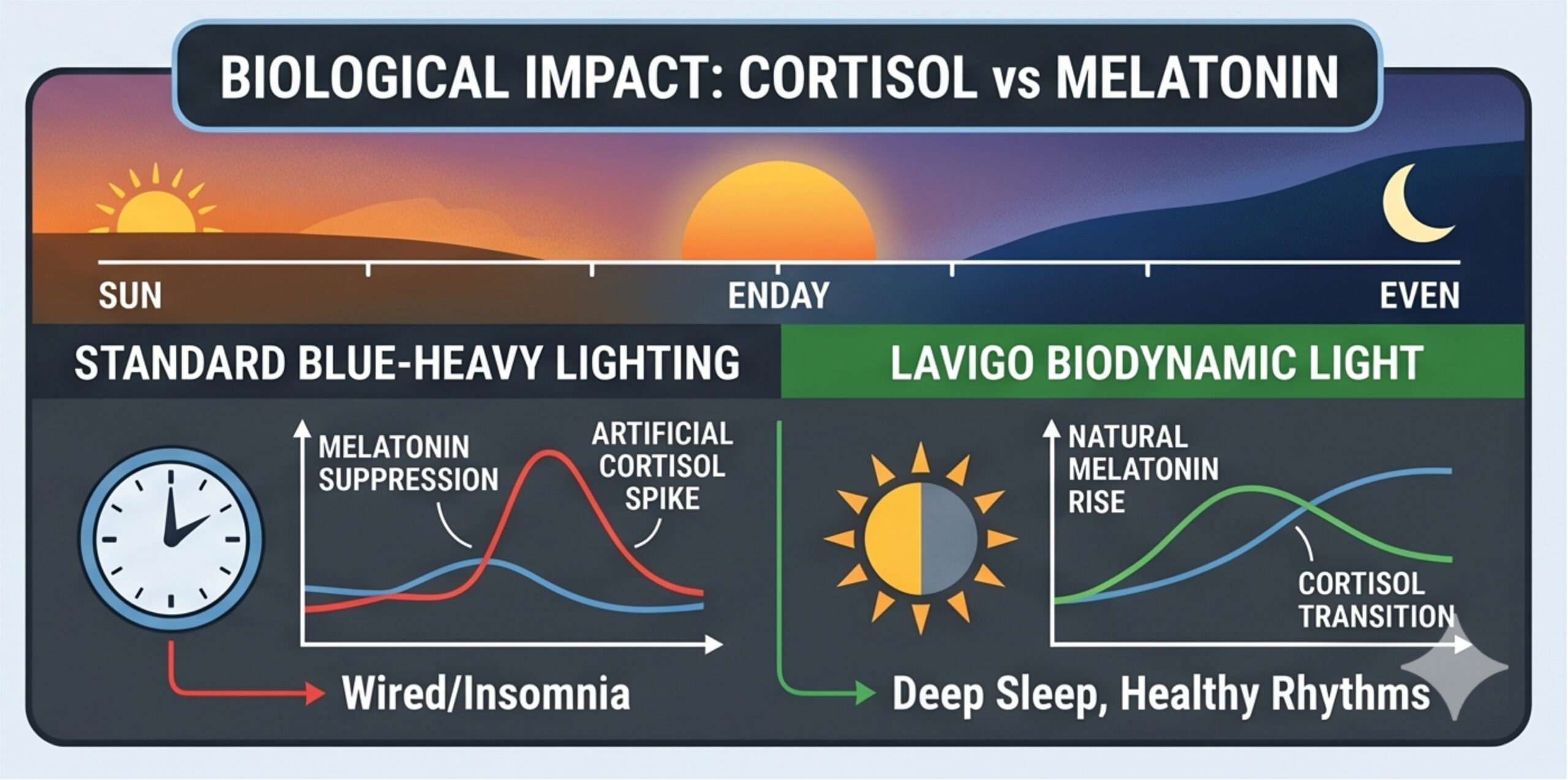
A: You want a neutral white. According to the Sleep Foundation, avoid “cool blue” lights in the bedroom at night, but don’t go too yellow or your child will fall asleep mid-sentence. 4000K is the designer’s “goldilocks” zone.
Q: Where should the lamp be placed relative to the desk?
A: To find the best lamp for studying placement, put it on the opposite side of your child’s dominant hand. If they are right-handed, the light should come from the left to prevent hand shadows from falling across the page.
Q: Are floor lamps safe for a kid’s room?
A: Quality best study lamps feature heavy, weighted bases that make them incredibly stable. Unlike desk lamps that can be easily knocked over by a shifting textbook, a floor lamp stays put.