Key Takeaway
Academic endurance is tied to ocular comfort. “Visual fatigue” is the silent killer of productivity. By switching from a high-glare desk lamp to a flicker-free, indirect floor study lamp, you aren’t just lighting a room—you are physically extending your child’s “focus window” by reducing the biological strain on their eyes.
We’ve all seen the orange-tinted “blue light” glasses. Parents everywhere are on high alert for screen time. But there is a massive gap in our home-office health strategy: the actual bulb sitting on the desk.
If your child is rubbing their eyes after an hour of Algebra, it isn’t necessarily the math. It’s likely a phenomenon called visual fatigue. When you hunt for the best lamp for studying, you aren’t just shopping for furniture; you are shopping for a medical-grade workspace.
The “Flicker” Factor: The Headache You Can’t See
Most generic LED bulbs have a secret. They don’t actually stay on; they pulse at a high frequency. While you can’t consciously see this “flicker,” the brain and the optic nerve are working overtime to process it.
This is why many “best study lamps” are actually focus-killers. That invisible pulse triggers micro-stress in the eye muscles. According to research on digital eye strain, this constant straining is the primary bridge to tension headaches and irritability.
Why the “Best Study Light” is Usually Not on the Desk
Standard desk lamps are “point sources.” They create a high-contrast environment—a blinding white spot on the book and a dark room everywhere else. This forces the pupil to dilate and contract every time the child looks from their page to their keyboard.
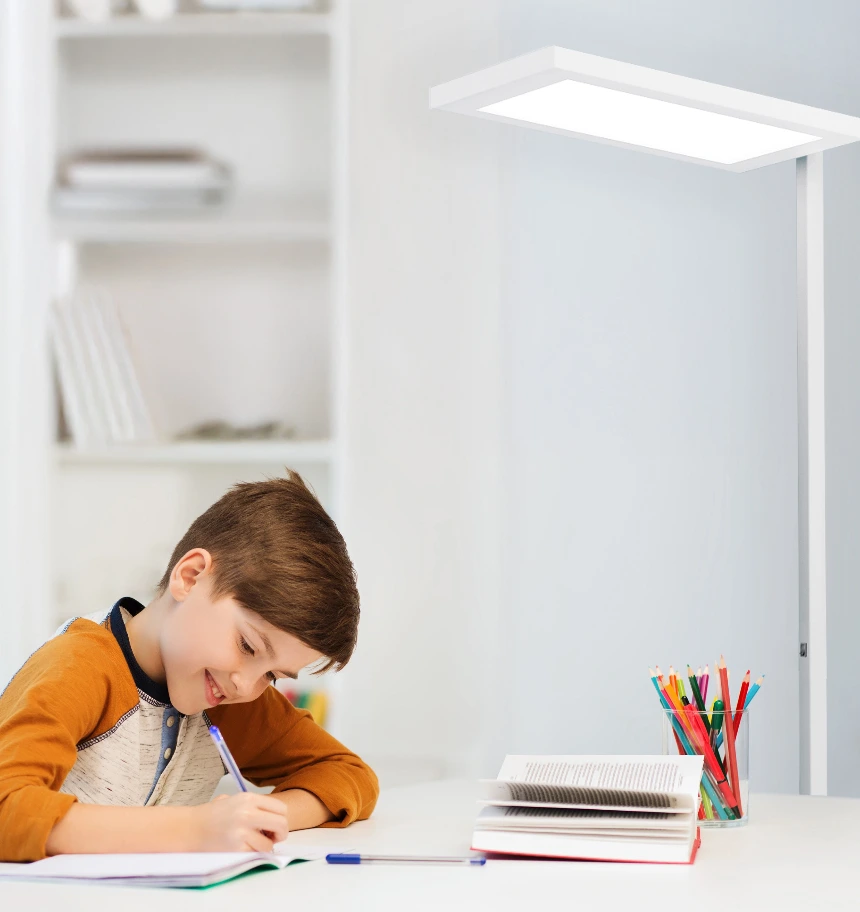
This is where the floor study lamp wins. A professional-grade model (like the LAVIGO.core Home) uses a mix of direct and indirect light. It washes the ceiling in light, which then bounces back down to eliminate those harsh, dark corners.
Why this matters for eye health:
- Shadow Suppression: It stops the “hand-shadow” struggle that forces the brain to fill in visual gaps.
- Glare Control: It hits the desk at an angle that prevents “veiling glare”—the shiny white reflection on textbook pages.
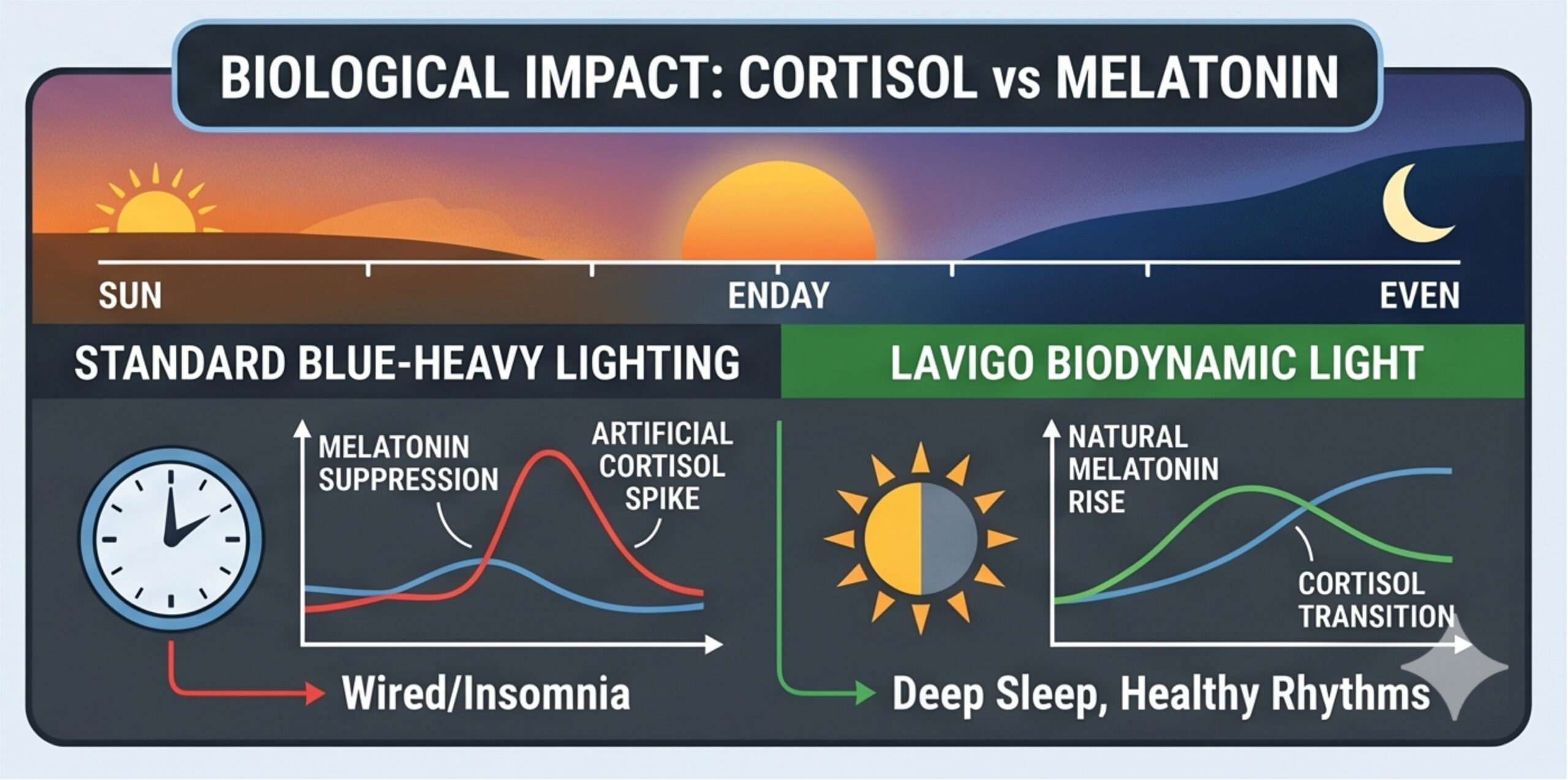
- Circadian Rhythm: By utilizing a neutral 4000K light, it keeps the mind alert without the “wired” feeling of high-blue light.
Setting the Stage for Focus
If you want to create the best study light environment, you have to think about the “volume” of the room. A floor-standing unit clears the desk of clutter and provides a massive, steady field of light that tells the brain it is time to engage.
When searching for the best desk lamp for studying, parents often find that the “best” desk lamp is actually a floor lamp that stands over the desk. It’s an investment in their comfort today—and their vision tomorrow.
FAQ: Lighting for Long Sessions
Q: Is “Natural Light” always the best study light?
A: During the day, yes. But natural light changes every 15 minutes. A consistent, professional best study lamp provides a stable environment that doesn’t force the eyes to keep readjusting to the setting sun.
Q: What is the most important spec to look for in the “best lamp for studying”?
A: Look for the UGR (Unified Glare Rating). Anything under 19 is professional grade. Most cheap lamps don’t even list this because their rating is too high (too much glare).
Q: Can bad lighting really cause a drop in grades?
A: Indirectly, yes. If a child’s eyes are tired, their brain is tired. When the biological cost of reading becomes too high, the child will naturally want to stop. Creating an effective study space is about removing those physical hurdles.
Q: How do I know if my current lamp has “flicker”?
A: Try this: Open your phone camera and point it at the light. If you see moving dark bands across the screen, that lamp has a high flicker rate. The best study lamps will appear perfectly steady on camera.